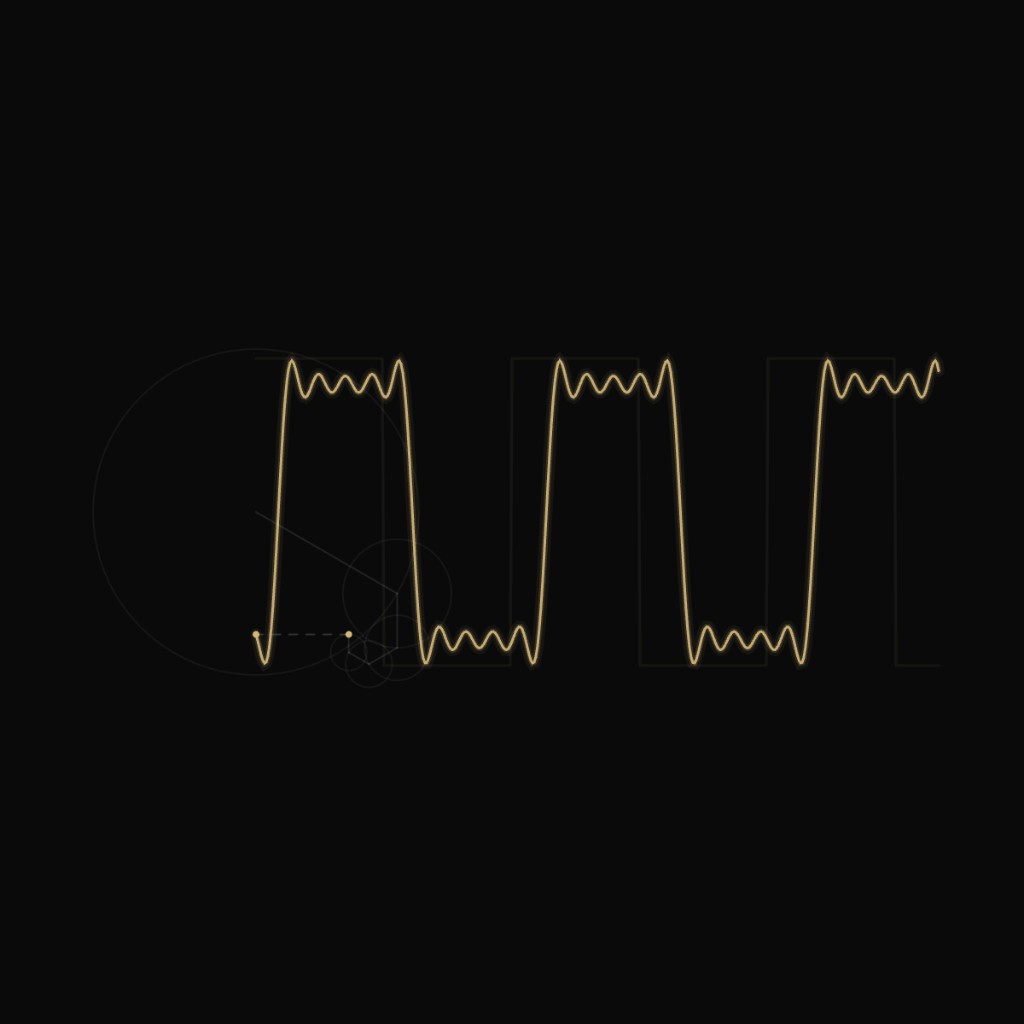
Fourier series
Add sines and cosines to approximate a periodic function, and change the number of terms N to watch convergence and the Gibbs phenomenon.
9 pieces about this concept, across works, topic guides, and exam visualizations.
Add sines and cosines to approximate a periodic function, and change the number of terms N to watch convergence and the Gibbs phenomenon.
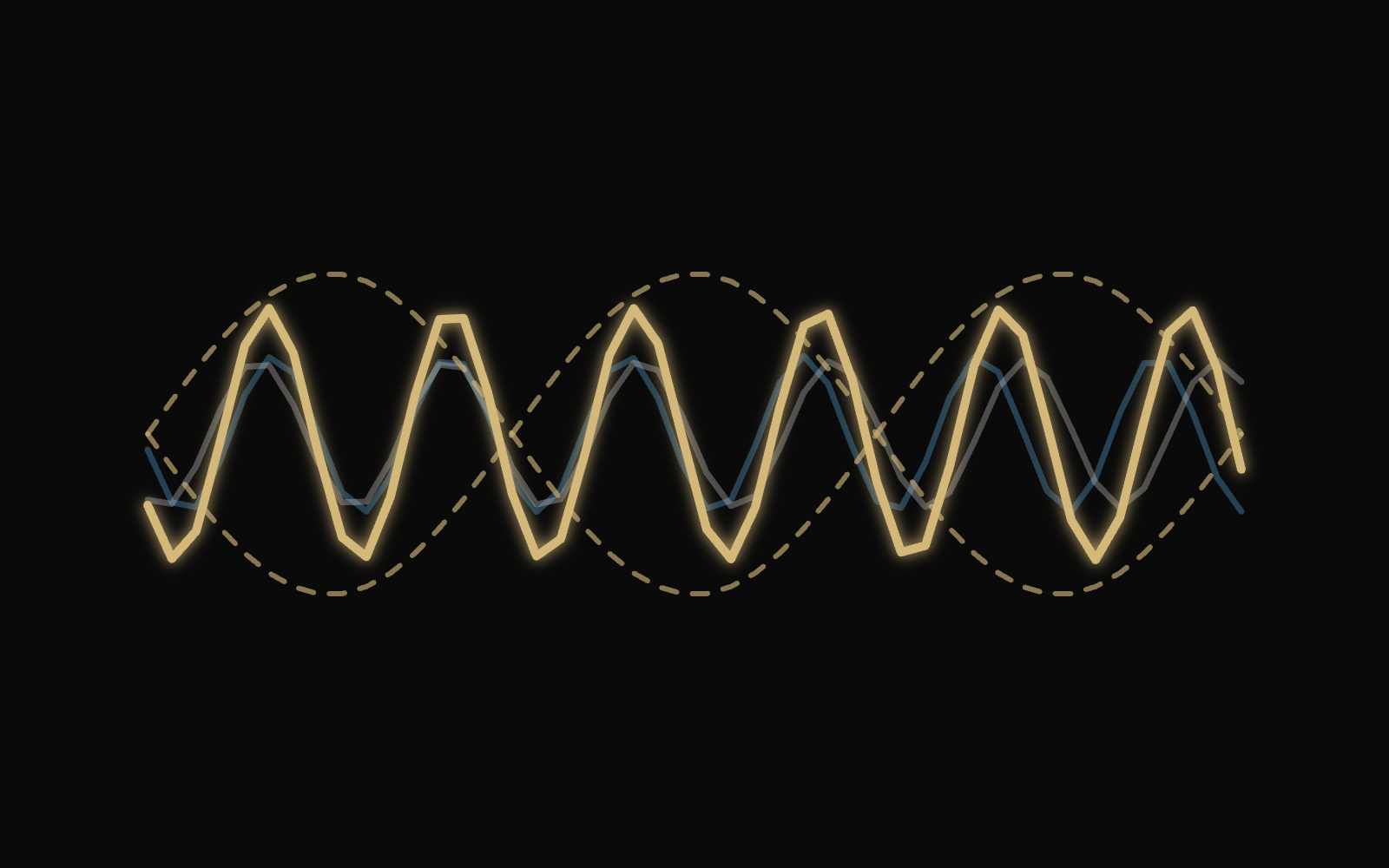
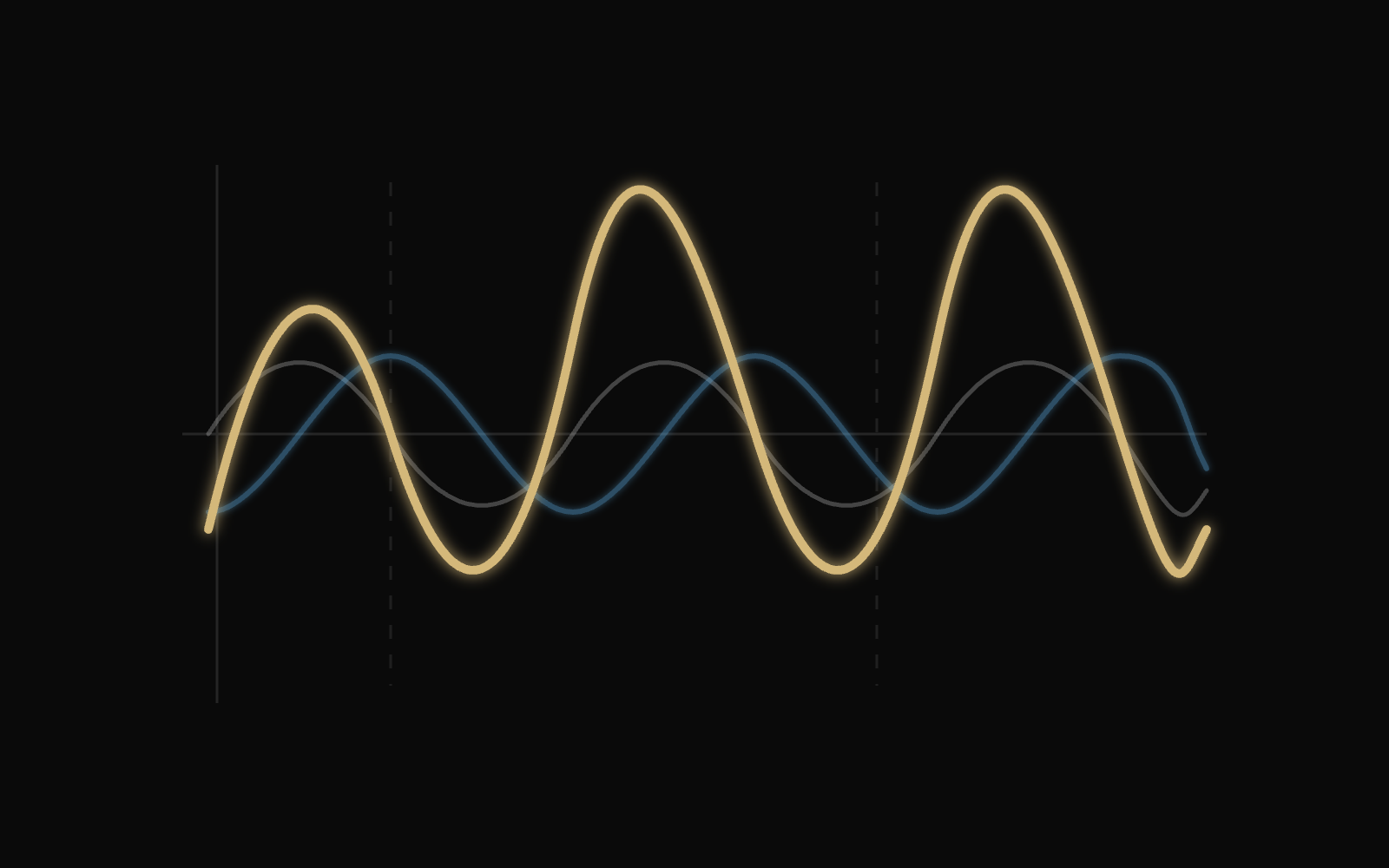
Start from the phase relation and compare displacement superposition, stationary-wave nodes, and two-source interference fringes, then watch how nearby frequencies form an envelope of beats.
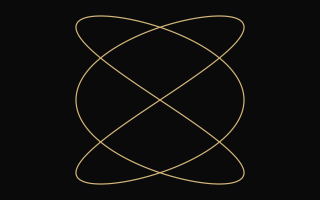
The curve x = A sin(at + δ), y = B sin(bt) takes its shape from the frequency ratio a:b and the phase δ.
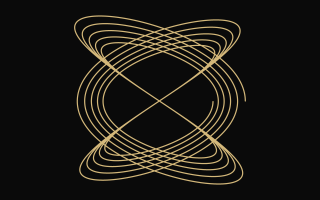
A damped harmonograph traces x = A sin(at + δ) e^(-dt), y = B sin(bt) e^(-dt), and frequency, phase, and damping set how the orbit closes in.
Two opposite traveling waves of equal amplitude and frequency add to y = 2A sin(kx) cos(ωt), whose nodes and antinodes stay fixed.
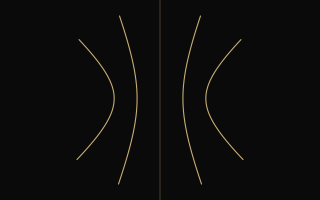
Two sources draw the curves where the path difference is an integer multiple of the wavelength.
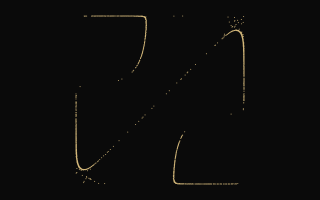
Points on a square gather where the amplitude of the selected mode is zero.
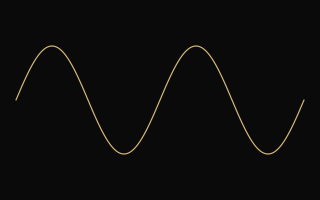
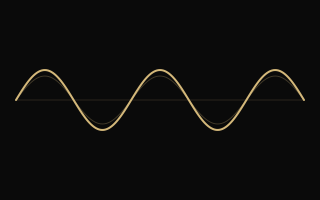
Drag A, T, φ, and k to compare y = A sin(2π(x-φ)/T) + k with the base sine wave.